Two Factors Why Our Propane Forklift Cylinder Service Is Better
Better Forklift Cylinder Service: Two Factors
Consider these two questions:
- 1. Why should I use propane forklifts (if we’re not doing that already) and,
- 2. Why should Hub City Propane provide our forklift cylinder service?
As you can easily guess, we have reasonable answers for both concerns, so let’s begin. Begin by comparing the strengths and weaknesses of diesel, electric, and propane machines.
Propane-powered forklifts make the most sense in the most significant number of industrial and commercial scenarios. While mighty diesel forklifts are helpful when the operators are shuttling huge loads, they’re of value only outdoors and present a health hazard when used indoors due to the dangerous exhaust fumes. Burning diesel fuel produces toxic levels of carbon monoxide and nitrous oxides.
How about electric forklifts? They’re safe to use indoors, but when the batteries run down, those electric lifts stop where they are, and they’re useless until the recharging brings them back to usability. Downtime costs money and productivity.
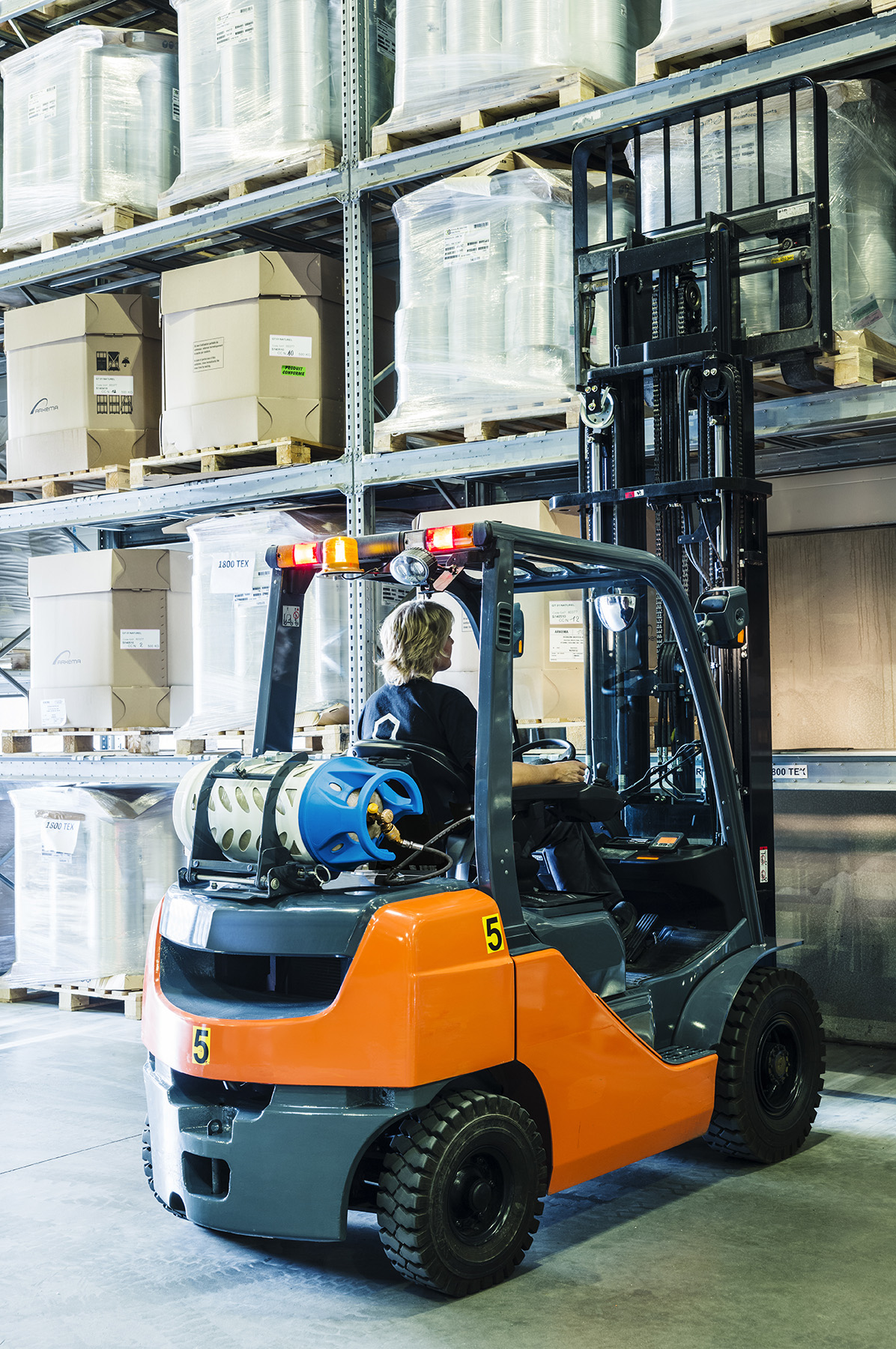
Propane? Safe to use indoors and outdoors, and when the operators realize they’re running low on fuel, swapping the nearly-empty cylinders with full tanks from nearby cages is a matter of moments. Propane forklifts can operate at higher speeds than electric models, too.
Those reasons may have you convinced already, but another factor comes into play when dealing with air quality standards.
You know that diesel forklifts are dirty devices, and the exhaust is not helping us cope with state and national standards on “carbon intensity.” The California Air Resources Board scored diesel fuel with a carbon intensity of 100 grams per megajoule.
If your thoughts turn to electric forklifts, hit the brakes.
With few exceptions, the carbon intensity to generate the battery-charging juice from the U.S. power grid is higher (score: 139 grams/megajoule!) than what you’ll face with a propane forklift. When measuring carbon intensity, you must consider how much of the electric-generating process in most states uses coal-powered plants. Add the line loss encountered between the electric company and your facility; it looks even worse.
Propane is a clean-burning fuel with a reasonable carbon intensity near 80. Shortly, you’ll see more about renewable propane using non-fossil fuel feedstocks. That takes the carbon intensity (as little as 20 grams/megajoule) to the lowest of any fuel options. You now know the multiple reasons that make the case for propane forklifts in the future.
Let’s roll to the second question: why is Hub City Propane the logical choice for your forklift cylinder service?
The word “service” is an excellent place to begin your assessment. If you contact our service center, ask for a few names of companies using Hub City Propane for their forklifts. If you crave a reliable source for propane forklift cylinders, check with actual clients for the truth.
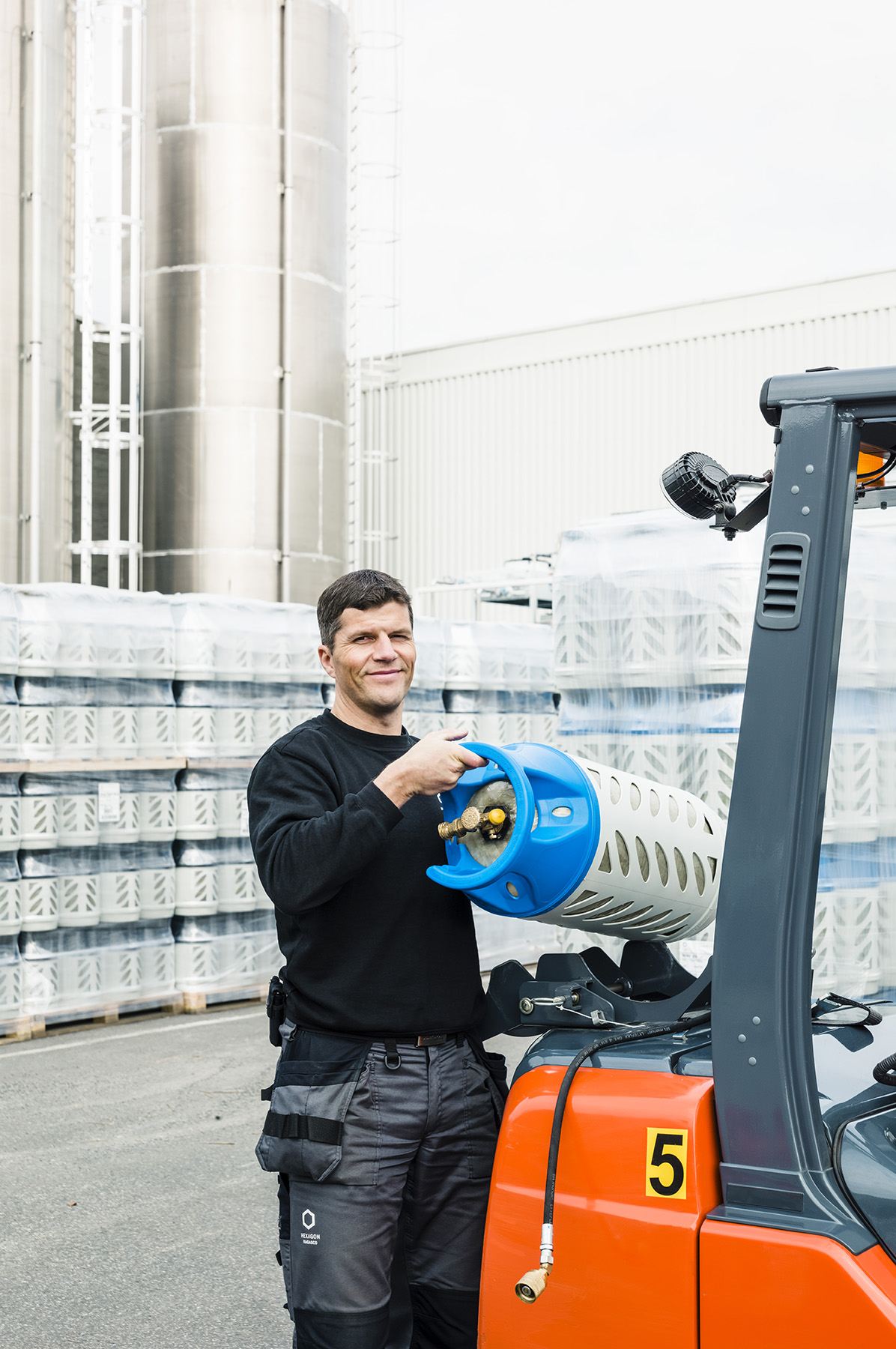
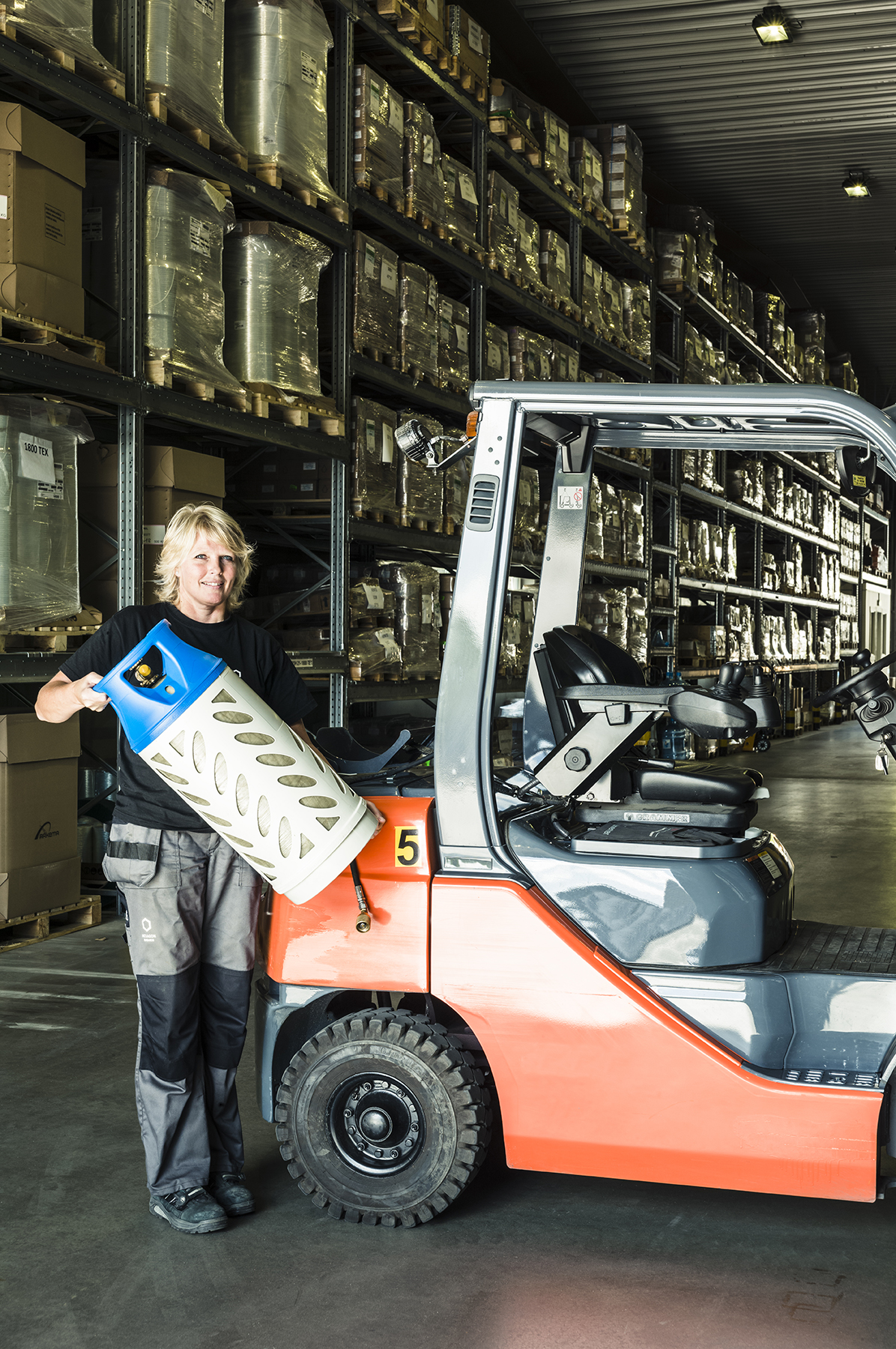
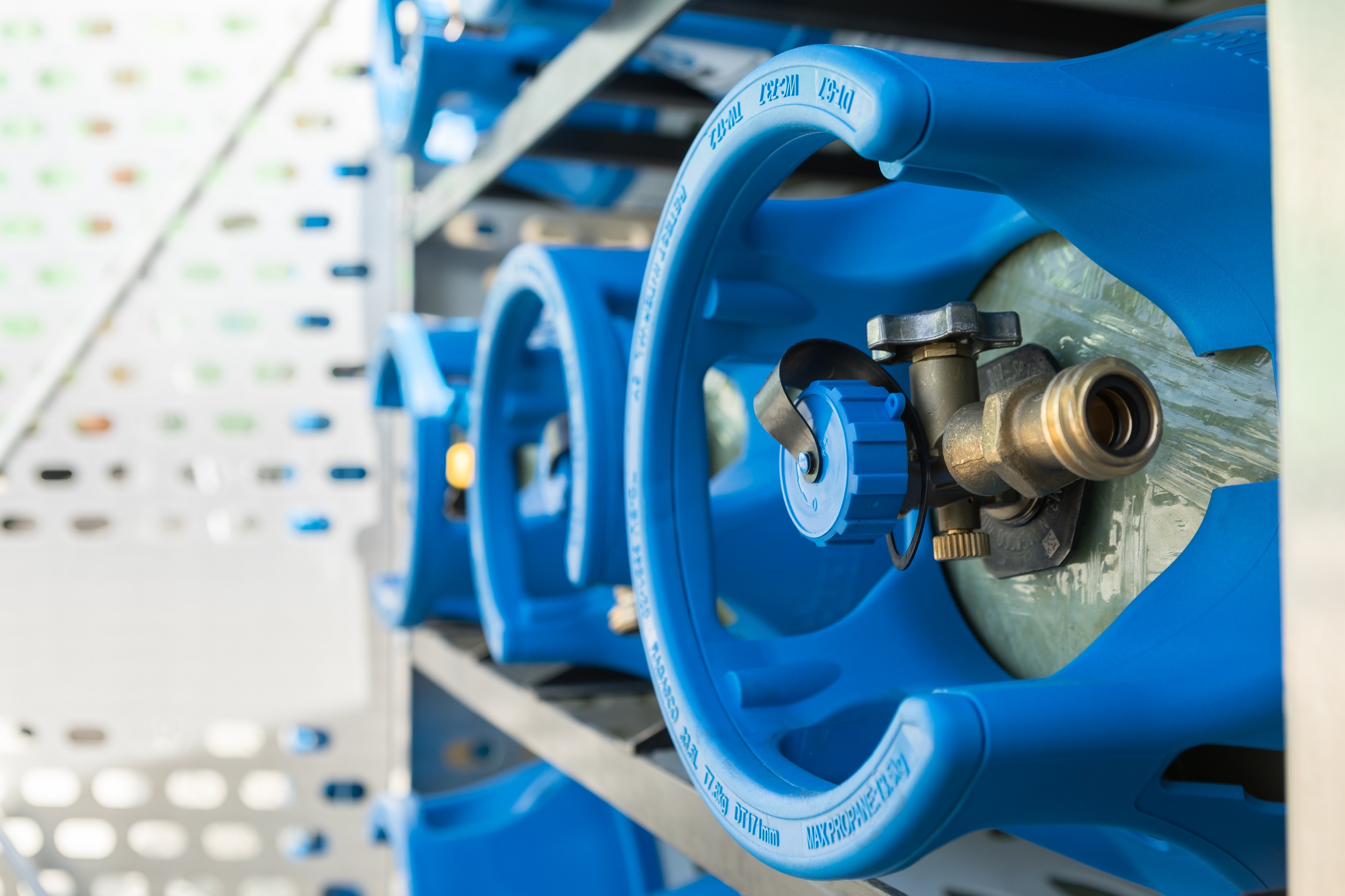
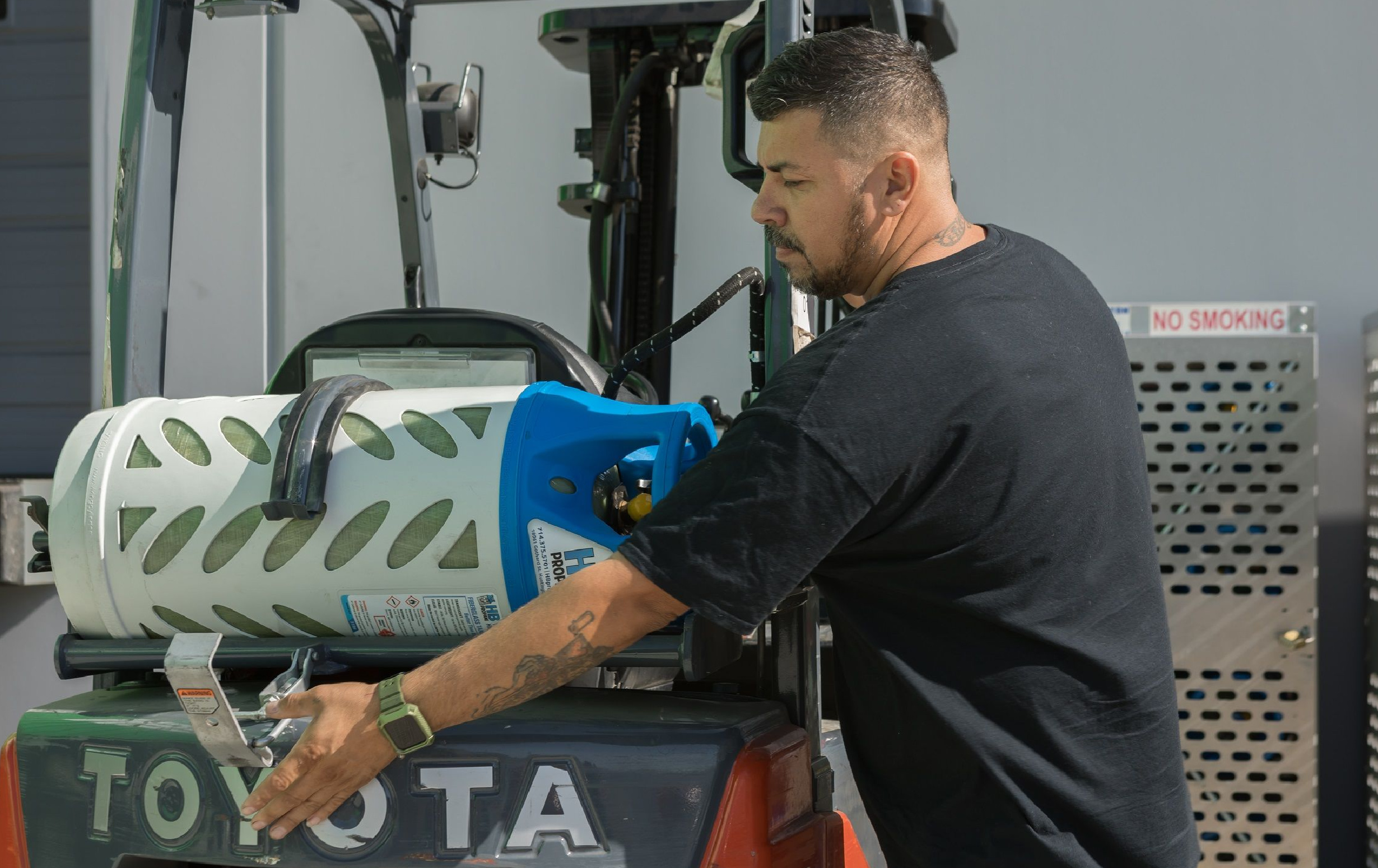
Another important factor for working with us is the composite forklift cylinders that have become our standard. These sturdy vessels of polyethylene and fiberglass have translucent panels, which give your operators a visual method to check the level of remaining liquid propane. Wasted fuel is no longer an issue.
Composite forklift cylinders have smooth, rounded handles, significantly improving from the sharp-edged, metallic handles on steel or aluminum forklift cylinders. Operators appreciate the comfort level of these softer ergonomic grips when carrying and swapping the tanks.
These lighter composite bottles, filled with propane, meet the OSHA standard for manual lifting – under fifty-one pounds. You may already know that full aluminum propane cylinders weigh more than OSHA parameters. As for steel forklift cylinders, forget about it!
There’s a safety factor that comes into play as well. Unlike metal cylinders, there’s no BLEVE when using composite bottles. The propane burns and melts the cylinder.
Our research and experience have shown us that propane forklifts are the way to go and that composite forklift cylinders are the best modern tanks. Our service performance at Hub City Propane can positively impact your satisfaction and your organization’s bottom line. Call us!
"Our research and experience have shown us that propane forklifts are the way to go and that composite forklift cylinders are the best modern tanks."